
Interviewing

A few weeks back I posted about the struggles of networking. This post was all to do with finding a professional in the field of technical communication to interview. Well thankfully I can provide a positive update as I have indeed managed to find a suitable candidate. It wasn’t easy but I managed to get there in the end with some help.  

However the most important part of this interview assignment is still to come up; the interview itself. When I heard back in week one that I would be conducting an interview I felt nervous straight away. Hearing the word interview brought back many unhappy memories of interviewing for jobs. All this worry wasn’t exactly justified however, as the interview I would be conducting would be a whole lot different to my past interviews. There won’t be any job at stake when I conduct this interview and I’m not under pressure. I will be trying to find out as much as I can about the job of an education technologist. Instead of being nervous I am actually very excited about this assignment. Getting the chance to learn about a potential career from a person who knows what its about is valuable. In a few months time I’ll be finished college and looking to take the next step. I’m undecided on what career I want to pursue as there are so many great options. If this interview goes well and I like what I hear, there’s a high chance I’ll make my decision based on this.  

With all the resources I’ve been given this semester about conducting interviews I’m confident it will go well. I’ve learned about how to structure an interview and about how to ask the right questions. These new insights will prove to be useful in both this assignment and my life in general. 
Articulate Storyline

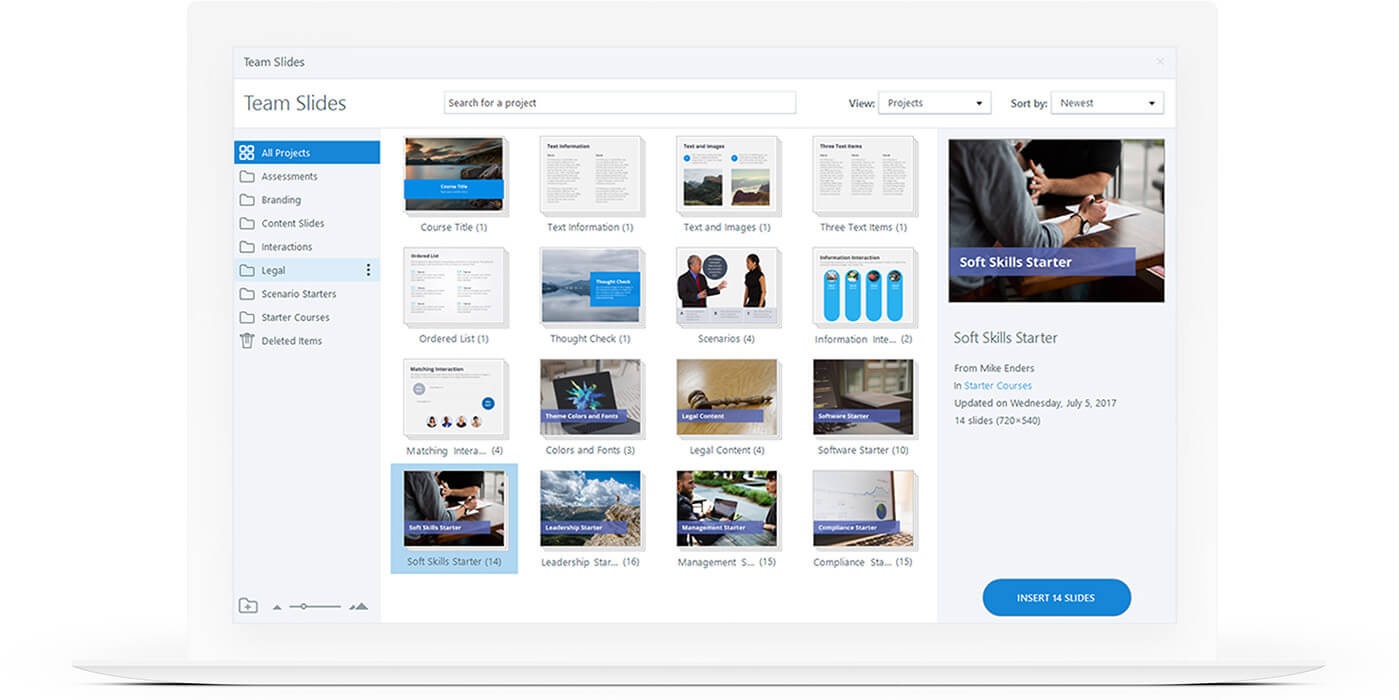
Articulate Storyline is an authoring tool used to create online e-learning courses. It allows users to create e-learning courses which can be delivered to a number of devices. It makes use of a block editing format where users fill blocks with content and connect them to each other. 

Key features of Articulate Storyline include: 

  • Audio-animation synchronization 
  • Closed Captioning 
  • Slide Layers 
  • Multi device compatibility
  • HTML5 and CSS3 support

Recently I’ve had the opportunity to become acquainted with this software. As part of my coursework for a college module I’m expected to create a digital learning resource. While we’ve been given the option to use any software of our choice, I’ve decided to choose Storyline. A major reason behind this choice is that our course were given a workshop in how to use Adobe Articulate. Speakers visited us from a company called Novitas and delivered a presentation that showed the uses of  Articulate.  Storyline was one of the applications talked about in this presentation and I got a good idea of what it was about. I learned about its key features and how these could be used to create high quality e-learning courses. I therefore decided that it would be best to use Storyline, as there is no point trying to learn another software package that I know nothing about. It also seems that most jobs in e-learning require some knowledge of  articulate. If I am to get a job in the field of e-learning in a few months time it’s essential that I learn how to use it. It will also look good if I can produce an example of an e-learning course created with articulate. At the end of the semester I will be creating an e-portfolio that I can show to future employers. Therefore using adobe articulate will benefit both my college grades and career opportunities. They sound like pretty good reasons for becoming an articulate master!

Storyboarding

Storyboarding is an interesting design strategy that I’ve become acquainted with over my 5 years in university. A storyboard is a visual representation of the layout and sequence of a digital resource. It should act as the designer’s blueprint and can help them formulate a clear plan. Elements of the design process such as scope and cost can be well gauged with a good storyboard.

Having had my first introduction to storyboarding a year ago, it’s time that I familiarize myself with it again. Just like I had to do as an undergrad, I’ve been tasked with designing a storyboard for an online course of my choice. Last year I decided to make a storyboard for a course that would show beginner DJ’s how to set up their equipment. This year I’ve shamelessly decided to use the idea again. However I am now a year wiser and recognize that there are a few faults with my old storyboard. Not only do I know a lot more about configuring sound equipment but I also know a lot more about storyboarding. My new knowledge in both fields will allow me to produce what I hope will be a more polished storyboard. Last year I had to use Powerpoint as my design tool which limited my design. The storyboard was nowhere near as interactive as I would’ve liked it to be due to the lack of functioning buttons provided by Powerpoint. This time round I have knowledge of software tools like Adobe Articulate that can help me produce a sleeker looking storyboard. I’ve also realized that I failed to make proper use of photoshop in my last storyboard. The photos I used did not fit properly in the storyboard and took away from the appearance. In addition I didn’t have as great an understanding of education theories which hindered my planning of the storyboard. I have e better knowledge of learning objectives now which will allow me to get the most out of my new resource.

On the whole I feel I’m much more set up for success thanks to all the new knowledge I’ve gained as a masters student. While I achieved a high grade on my last storyboard I’m hoping to go one better this time around!!

Learner Support Systems

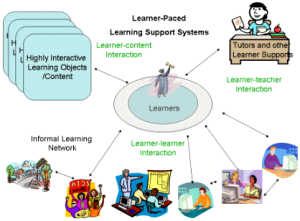
During this week’s lecture for my module EL6052, I learned all about learner support systems. Learner support systems are basically services that are provided to distance learners that enable effective learning. When the lecturer mentioned the concept of learner support systems I immediately thought of it in a physical context. I’ve been exposed to learner support systems for practically my whole life. In primary school learner support systems followed that of a simple educational system. I had a teacher instructing the lessons, I had access to supplementary resources and there was an academic administrator. When I moved onto secondary school the learner support system grew with the addition of guidance counsellors and chaplains. Then when I started studying at university I had access to an even larger support system that included library services.

However I had failed to realise that there are a whole host of services available through online mediums. These online services are every bit as important as physical services. I guess I had been guilty of underestimating the sheer size of the support system available to me at my university. Being part of a course that is tailored to both distance learners and on campus learners has really opened my eyes. When designing an online course, it’s not just as simple as making lecture notes available online for students. There are a whole host of online services that need to be available to that student. Some of these services include academic advisors, technical support, financial services, restructured course material and library services. On top of this the tutor themselves have extra obligations that they might not have if they were teaching on campus students. They need to make sure that their coursework is suitable to those studying online. The technology or virtual learning environment that they use is likely to experience technical problems from time to time. The tutor needs to make sure that these issues can be resolved quickly to ensure the students learning is uninterrupted. They also need to be contactable and maintain a reliable online presence. Basically there is an added responsibility on the teaching staff.

As someone who could end up pursuing a career in higher education, I learned some valuable lessons my weekly lecture. I realise just how difficult the job of teaching staff is nowadays and what needs to be provided to the modern student. In today’s era of technological advancement people have to adapt quickly and make the most of new technology. Those working in higher education are no different. As distance learning grows in popularity there will be an increase in demand for educational technologists. Perhaps one day I could end up working in the provision of learner support systems myself. Whatever happens I look forward to learning more about the field of education technology.

Dissertation

Mention the word dissertation to a student in any part of the world and you’ll more than likely elicit a similar response. Students are known to loathe the idea of undertaking a dissertation and many regard it as the most stressful aspect of their studies. However the dissertation is also a chance for students to hone in on a topic that interests them. And while I myself am no different to other students, I am determined to give it my best shot.

When tasked with choosing a dissertation title back in December I was at a complete loss. Picking a topic out of the sky seemed impossible as there were so many options available. When looking at potential research areas I found myself going down an internet rabbit hole. Despite trying to narrow down my list of potential topics, I found the list getting bigger by the day. I decided that it would be best to weigh out the pros and cons of each topic and see which would work best. In the end I picked usability as my topic due to the fact that I had just completed a large assignment on usability testing. I had enjoyed the experience of testing the usability of a local government website. When writing the literature review for this assignment I uncovered plenty of interesting articles. I had started to realize that a lot of these articles shared something in common. The majority of them discussed usability issues with e-government sites in developing countries. Also, a lot of the usability issues mentioned in these studies were very similar. I therefore decided that I wanted to write a dissertation on the usability issues found on e-government websites in these developing countries.

With the title decided I now had to pick a methodology. This was perhaps even trickier than finding a topic as I had only ever completed two large research papers. The methodologies used in those assignments would not be suitable for the topic I had proposed. However when writing the literature review for one of these assignments I came across the term systematic review. A systematic review provides an exhaustive summary of evidence related to a research topic. It summarizes past research and and allows overall conclusions to be made. It also only includes quantitative studies which means there’s a whole range of qualitative studies left out. For this reason I decided I would not undertake a systematic review but rather an integrative review. The integrative review is similar but it includes qualitative and quantitative studies. It also allows for new theories to be developed instead of just making general statements on the state of literature.

Although I have decided on my topic and methodology, there still remains a lot of work to be done. I have chosen a methodology that I have not used before so I am taking a risk. However I want to write a dissertation that contributes new findings to the current knowledge on my topic. I feel that this can be achieved although it will not be easy. By the end of this experience I will have gained a wealth of new knowledge on usability which can only be a positive thing. I will also have a piece of research that can be shown to potential employers. Therefore I will hope to have a different opinion on writing a dissertation by the end of this experience!


Networking blues

Networking is an important aspect of life as a professional. Despite this however it is often overlooked and its importance is misunderstood. When I think of the term networking, I conjure up an image of douchey men in suits with slicked back hair, bragging to their colleagues about their great jobs. And while part of me still feels this way, I am certainly starting to realise the importance of having good contacts.

At present, I am frantically trying to organise an interview with a technical communicator for a college assignment. I have been tasked with reaching out to a company in the hope that one of their employees will speak to me. However this has proved to be a lot more difficult than I initially expected. I’ve contacted close to 15 companies already, either by email or phone, but nobody is willing to help me out. Busy professionals seem reluctant to give up their valuable time to speak with a college student. While others in the course have a range of professional contacts due to the fact they’ve been working in the industry for years, I am at a major disadvantage. I’ve only recently graduated and have very limited work experience. While I’ve worked in an insurance company for a few years, they’ll be of no use to me. They don’t hire technical communicators it turns out so I’m going to have to cast my net fairly wide.

Although this assignment is causing me a great deal of stress, there is one slight positive to take out of it. I’ve learned the importance of networking and how it can make my life easier. In the past I’ve dismissed anything to do with networking. While fellow students have been making the most of networking tools like LinkedIn, I’ve been resting on my laurels. Even when I was working for a large multi-national corporation I failed to make the most of any opportunities to gain contacts. Hopefully I can break this trend and start to build meaningful relations in the industry.

MadCap Flare

Madcap Flare is an authoring tool used to create documentation for online help, user manuals, software documentation, and other content. It’s a versatile software tool that allows documents to be published in a range of formats such as pdf, online, word and mobile. Key features of madcap flare include:

-XML editing

-Multi-Channel publishing

-Single-sourcing and integrated cloud based editing

– Publishing Project and content management

Recently I’ve had the opportunity to try this software out for myself. In one of my weekly labs for a college module, I was given an introduction to MadCap Flare. I learned all about it’s key features and potential uses, and I even got to use the software itself. I was able to try my hand at creating a project and building targets. Although I’ve used a number of software programs while studying in college, I still found it quite difficult using the MadCap software. I’ve always struggled to grasp markup languages like HTML and CSS. Seeing new markup languages such as XML and a range of new concepts gave me quite the headache.

Despite all this, I’m looking forward to getting to grips with the software. At the end of the semester I’ll have to create my own e-book, so it’s crucial that I practice using the software. I’ll also need to have proficiency using MadCap Flare if I hope to have a career in Technical Writing. Many employers look for applicants to have experience creating technical documents with software packages.

As a result it’s safe to say that I will be binge-watching Youtube tutorials like this in the hope that I can gain some level of proficiency! Hopefully by the end of semester I’ll be able to report back here with an update on my experience.

Usability Testing

A few months ago I was introduced to the concept of usability testing. Usability is defined as “a quality attribute that assesses how easy user interfaces are to use”. At the time, I didn’t realize that this concept would play such an important role in my life as a student. It was when the lecturer mentioned that we would be carrying out our own usability test that I really began to take note. The idea of having to carry out a usability test involving human participants was daunting. I had never previously carried out any sort of research involving human participants. The thought of having to adhere to ethical standards also placed extra pressure on me.

This meant I had to knuckle down and invest a lot of time trying to get a grasp of the assignment. I eventually decided that I wanted to perform a usability test on a county council website. A major reason behind this was my own negative experience of using my county councils website. I had hoped that my research would shed light on a genuine cause of frustration for many people. After writing the research proposal and receiving my feedback I carried out the usability test itself. The test itself went well and the results justified my opinions on the selected website.

All in all, this assignment proved to be very rewarding. For the first time in my academic career I had carried out research using human participants. I also gained an insight into the field of usability testing. This has opened up new avenues for me in terms of future careers as I feel I could be suited to a job in testing. Also, I decided to delve into the world of usability again, when choosing my dissertation title.  Had I not found the area of usability so interesting, I’d more than likely still be trying to find a suitable title!

reflective Learning Blog

A Reflective Approach to Learning Experiences

Ryan Lanz

Fantasy Author

College Life

A Lot More Than Just Studying

TWO WRITING TEACHERS

A meeting place for a world of reflective writers.

ethanknewmedia

Writing for New Media

The Daily Post

The Art and Craft of Blogging

WordPress.com News

The latest news on WordPress.com and the WordPress community.

reflective Learning Blog

A Reflective Approach to Learning Experiences

Ryan Lanz

Fantasy Author

College Life

A Lot More Than Just Studying

TWO WRITING TEACHERS

A meeting place for a world of reflective writers.

ethanknewmedia

Writing for New Media

The Daily Post

The Art and Craft of Blogging

WordPress.com News

The latest news on WordPress.com and the WordPress community.

Design a site like this with WordPress.com
Get started